Research
Client
Rendering
Project Proposal
The project proposal by Busselli Scherer, dedicated to the construction of the new Rita Levi Montalcini Laboratory Center, draws inspiration from the immensely prestigious scientist, to whom this place is dedicated; a woman representing social progress and gender parity. A world‑renowned researcher, mentor, and innovator, as well as a figure of great grace and sensitivity. The architecture presented through this project aims to embody all these qualities to serve as an identity reference point not only within the world of the Spallanzani Institute, but also at the European and international scale.
The project makes it through a precise volumetric approach, the creation of a physical and visual connection network, and specific solutions designed to ensure environmental and social sustainability, as well as a special smart façade complemented by a green roof. Thanks to all these aspects the new Rita Levi Montalcini Laboratory Hub aims to be recognized as a dynamic and synergistic center of excellence, in harmony with its context and with the people who will experience it.
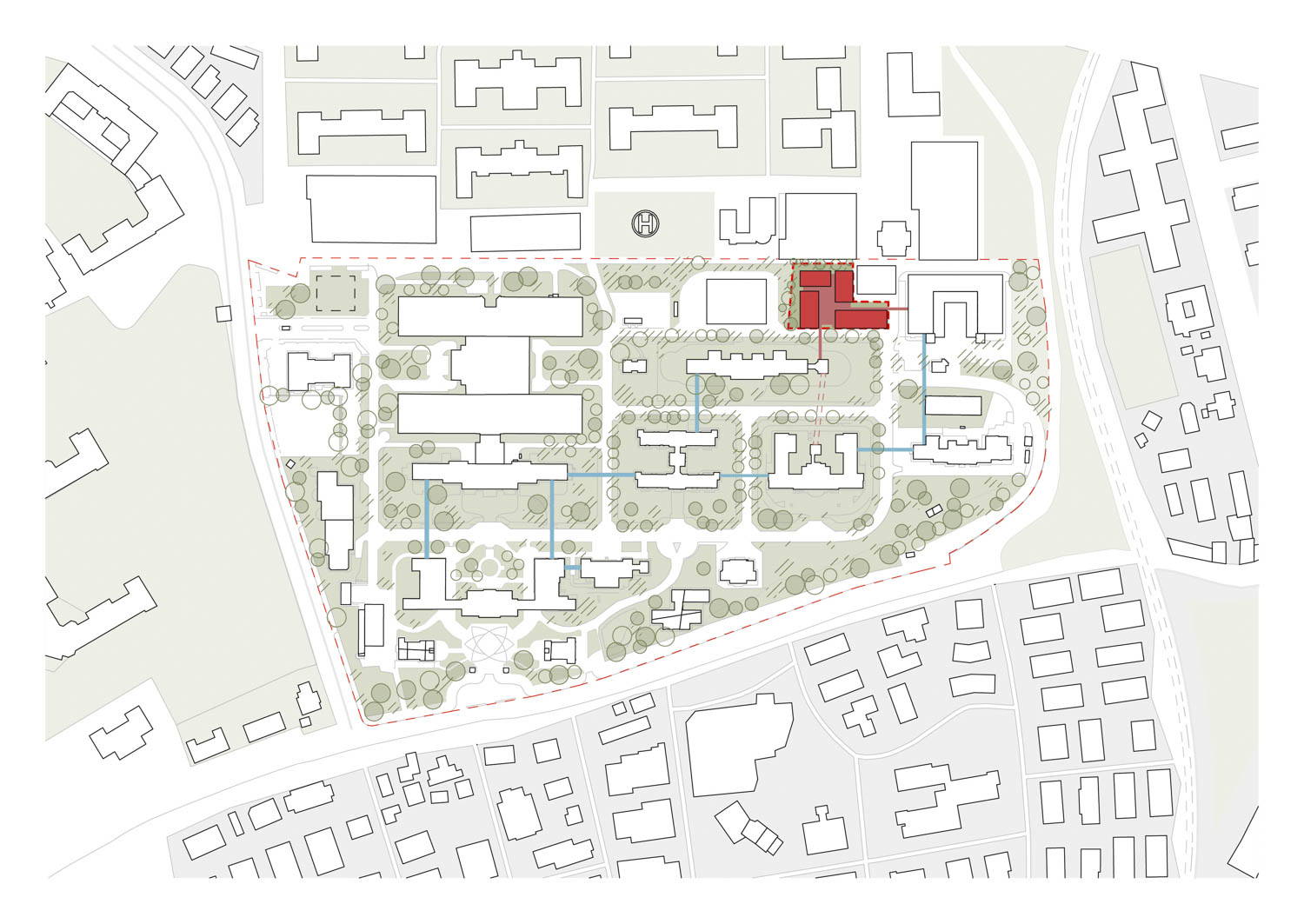
Relationship between new architecture and its context
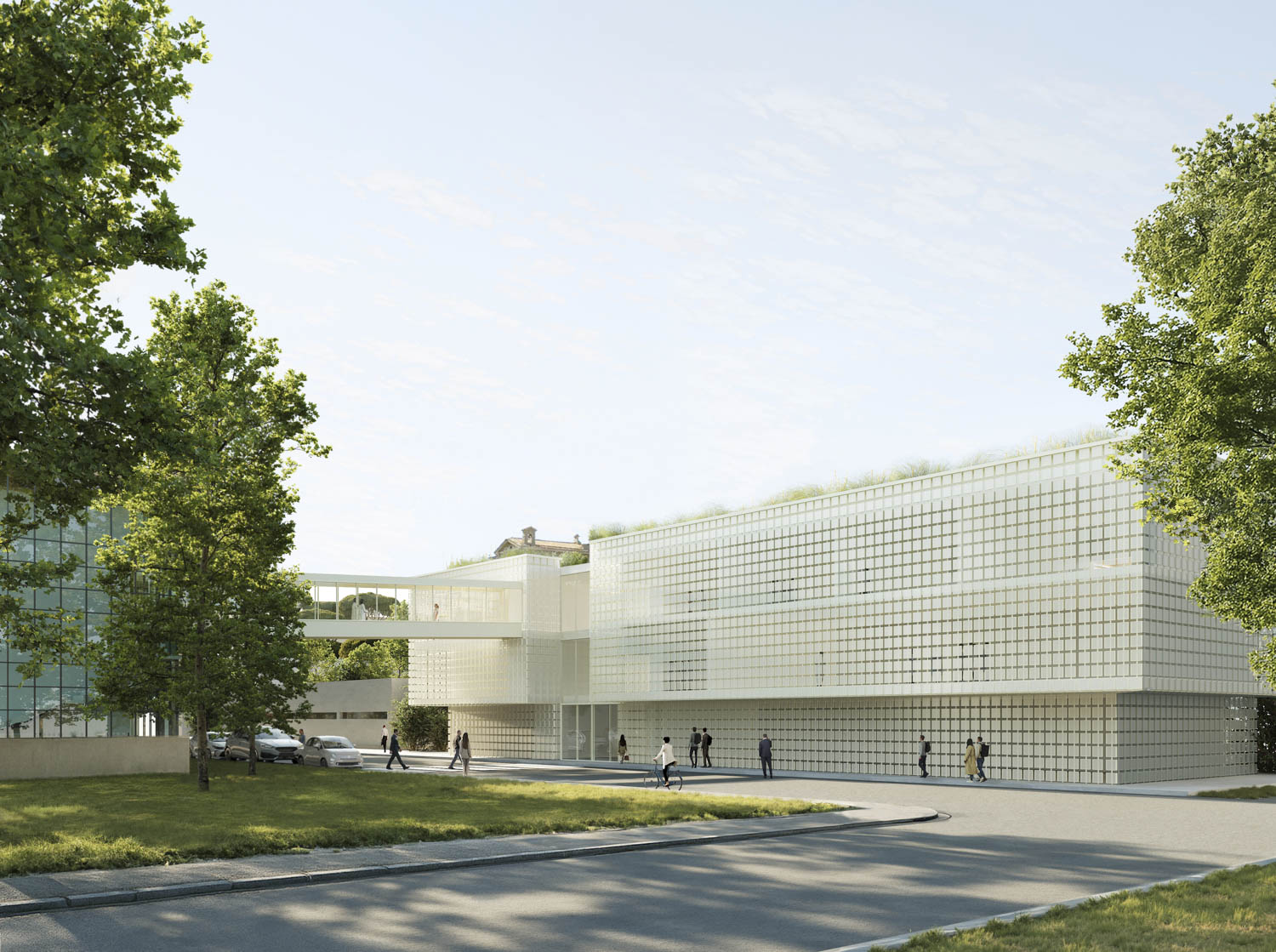
The new hub presents itself as a light smart structure that defines its visual identity without imposing its surroundings. The color choice of the façade, leaning toward white, aims to create a precise visual play.
At first glance, the building aligns itself with the colors of the nearby building; Alto Isolamento pavilion, becoming bright and symbolically connected to the world of research.
At the same time, the materials of the façade, partially reflecting the sunlight of Rome, take on warmer tones, establishing a visual connection with the historic reference buildings, which typically feature yellow and ochre hues. Through this choice, the new center of excellence positions itself as a link between history and contemporaneity while maintaining its own expressive originality.
The concept
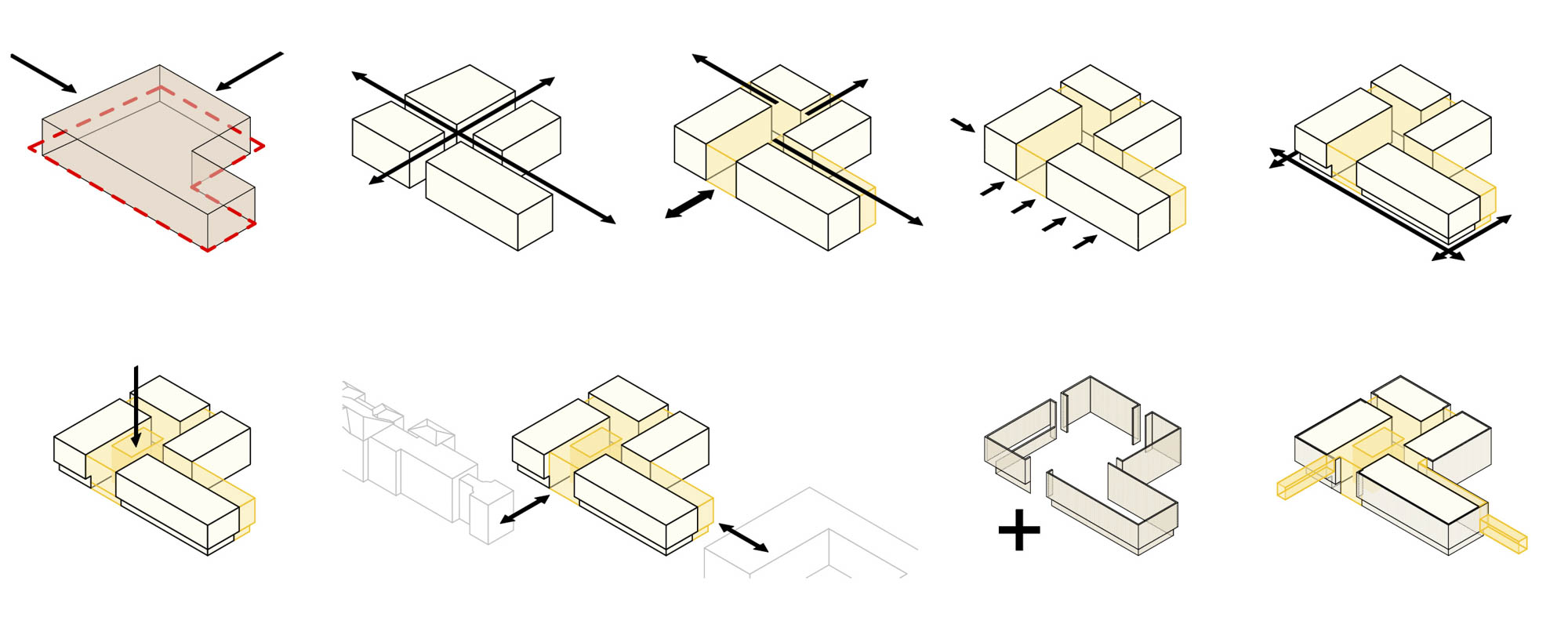
The concept of the project is based on several different elements such as flexibility, autonomy, interaction, and sustainability, aligned with all the requirements of next‑generation of the research centers spaces.
Four independent volumes, which are also autonomous in terms of their mechanical systems, are served by four dedicated vertical technical shafts and open onto a central foyer, the social heart of the building connected through a flexible and intuitive linking spaces. Each volume fits into the site, maximizing its potential and functioning as an independent element, operational in its own individuality.
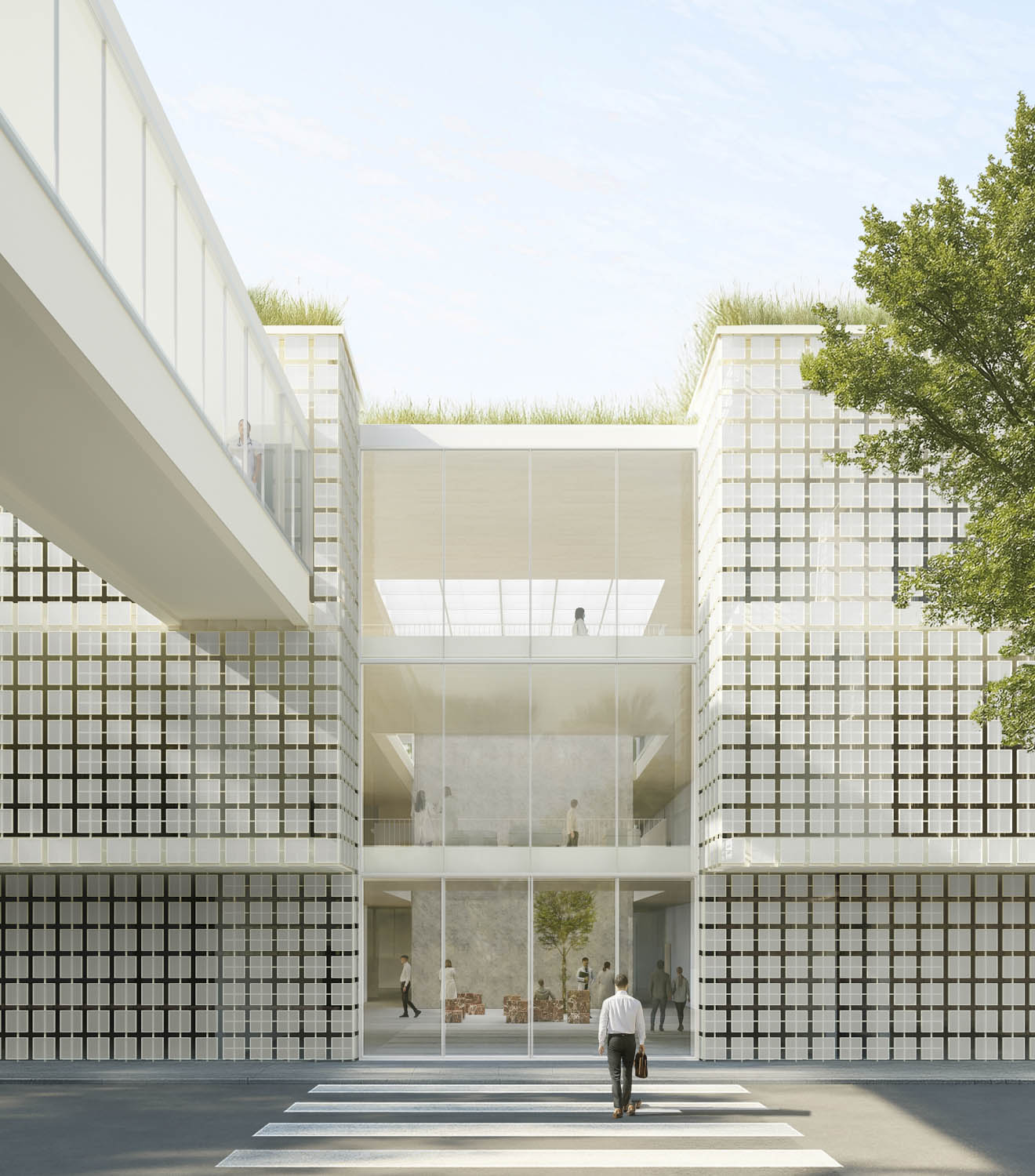
Interior circulation system characterized by suspended walkways serving as horizontal connections, balconies, and shared meeting areas on each floor. It creates a vibrant interior environment that enhances the interconnection between the various volumes. Seen from the outside, overall unity is provided by the materiality of the façade shared by all its elements, which defines the architectural identity and gives it a strong innovative component.
The perception is that of an interconnected network, a space in motion, where every part communicates with the others through a network of defined connections. On the outside, this suspended network of links connects to the two adjacent buildings at different levels, creating a visually ecosystem that is distinctive and recognizable.
A suspended transparent tunnel that connects the heart of the buildings to the outside, enhancing the perception of a unified and interdependent system.
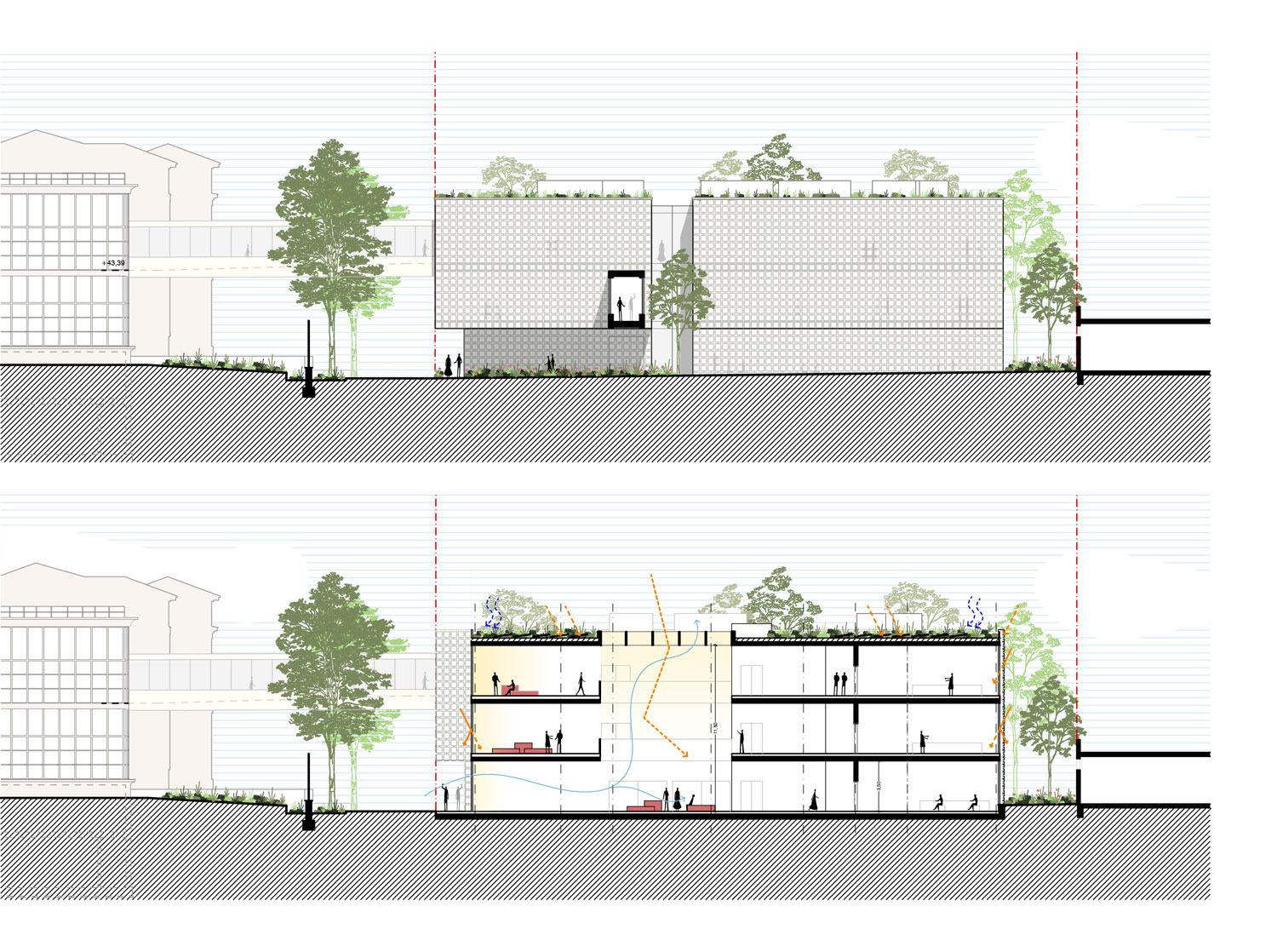
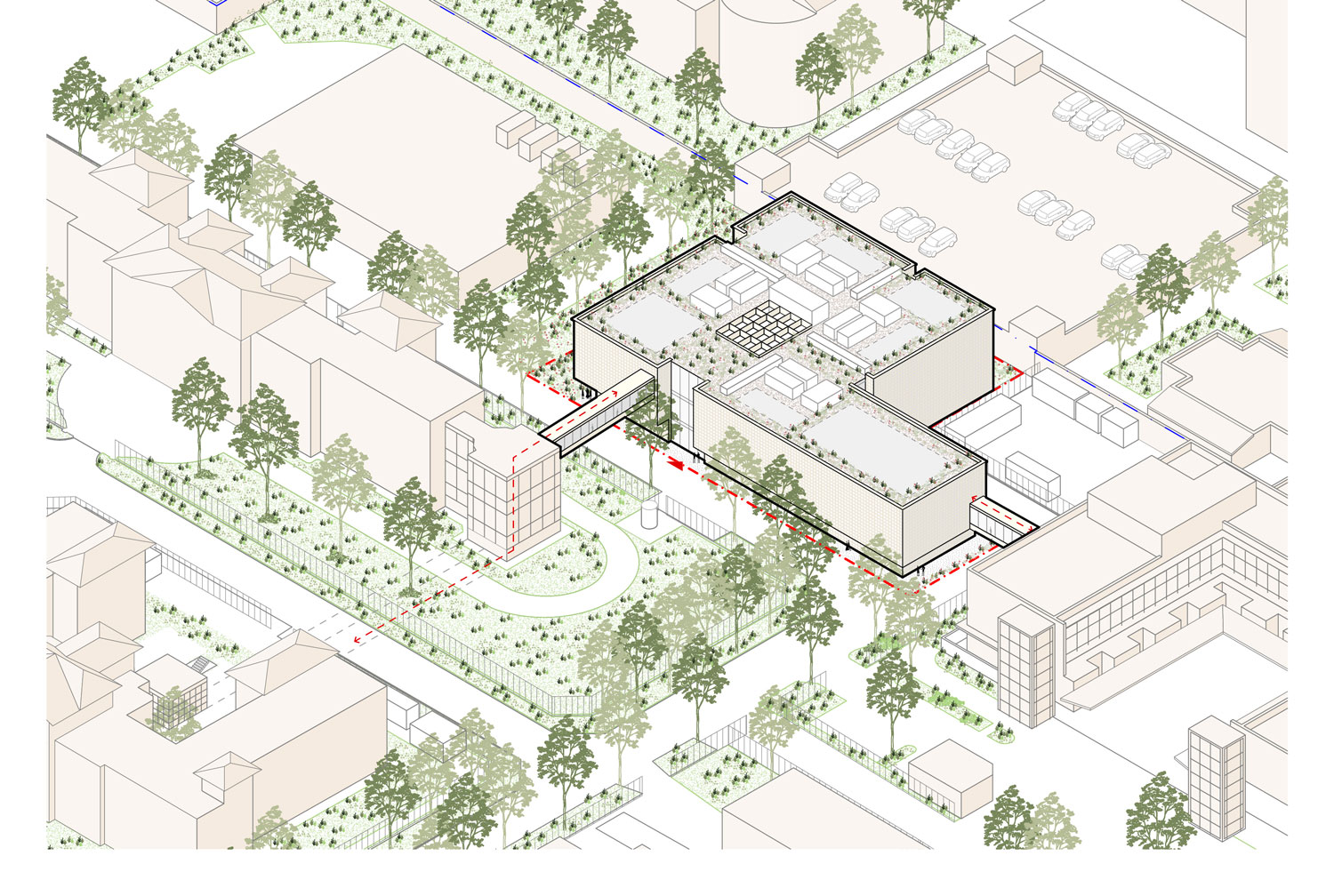
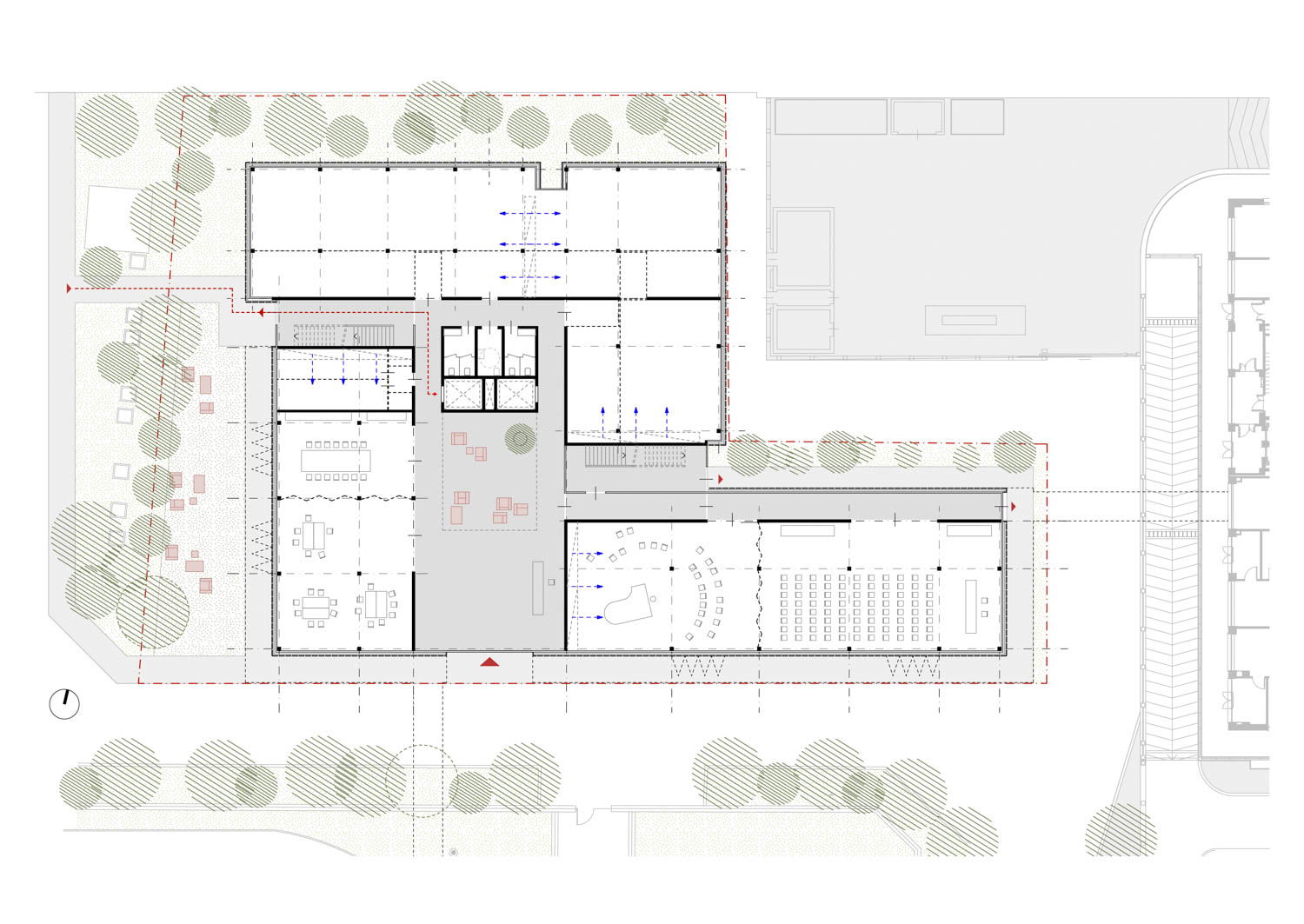
Flexibility of use is conveyed and expressed, on the one hand, on the ground floor, where two large multifunctional spaces can be adapted according to needs and emergencies, and on the other hand in the configuration of four autonomous volumes of the building which, thanks to the separate management of the systems, allow the internal spaces to be adjusted for future uses.
Alongside the choice of materials and the selected mechanical and electrical solutions, the project’s sustainability is most clearly manifested in the smart façade; a sustainable system for shading and capturing solar energy, designed to maximize the benefits of the intense irradiation typical of Rome.
The foyer
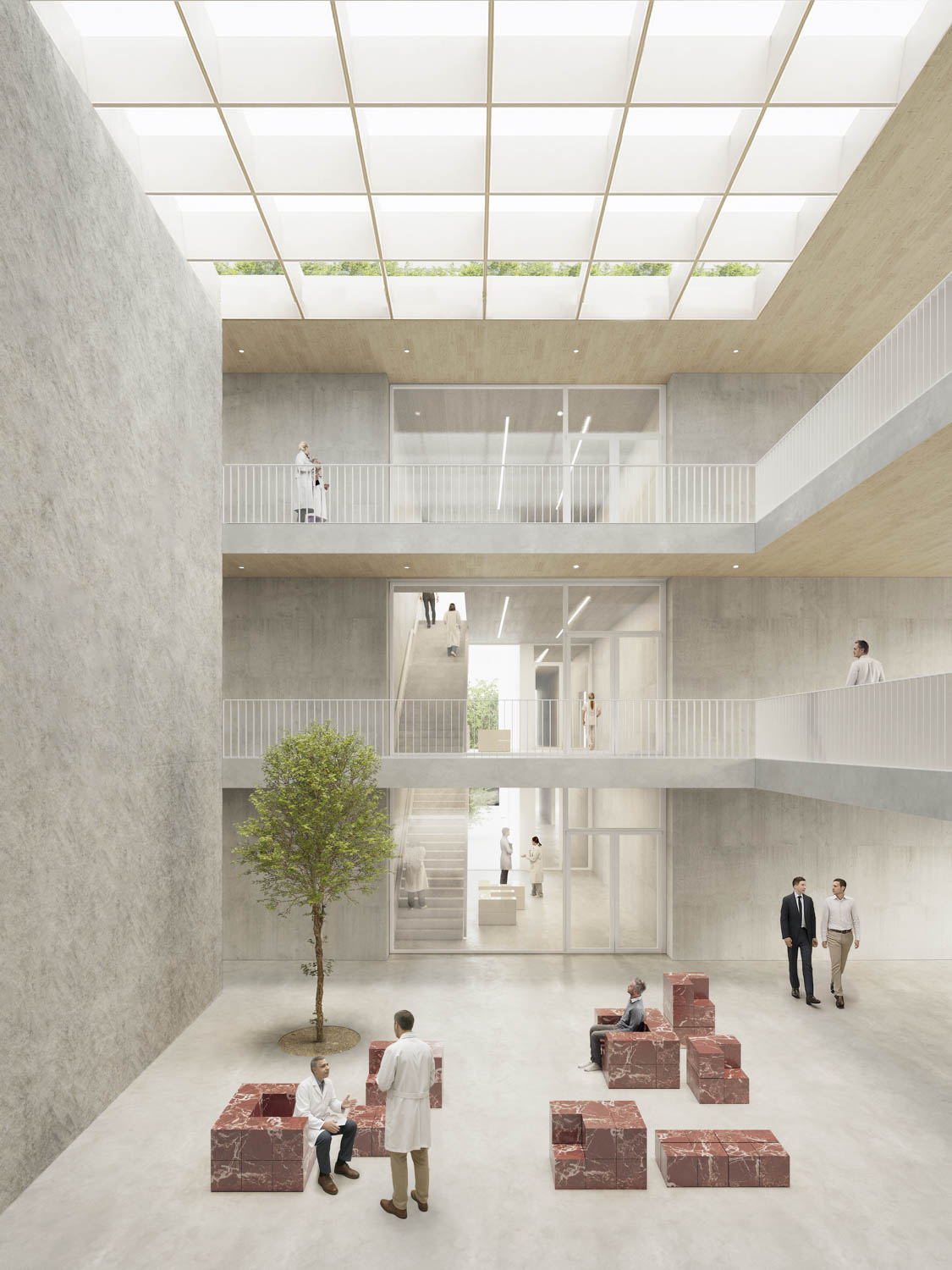
At the heart of the building, the four independent volumes converge to create a central foyer, an emblematic space illuminated from above by a skylight that brings in natural light and enhances the sense of openness. A user-centered environment that supports interaction across various times of day, highlighting the changing qualities of light and the material colors of the building. The central Atrium is a place to cross and pause. A symbolic space for connection and gathering, featuring modular and configurable furniture that can adapt to any layout and accommodate new functions; when needed, it can be conceived as an institutional and representative space or also hosting important presentations or events. In this place, slightly off‑center from the skylight, is placed a tree as a symbol of life, regeneration and vitality.
At the core of the four volumes lies a compact block containing the service areas and the elevator, ensuring full accessibility across all levels of the building while discreetly minimizing its visual presence.
A scenic architectural frame highlights the material wall, whose pronounced texture conveys both prestige and strong expressive identity for the new Laboratory Hub. This opaque element, with its uniquely tactile surface, offers a distinctive sensory experience.
The main entrance
The main entrance is an impressive full‑height glass element that separates the south volume from the east volume, creating a strong visual connection between the exterior surroundings and the internal foyer.
Adjacent to the entrance, foyer and lounge areas are distributed across multiple levels, conceived as spaces for relaxation and informal interaction.
From here, those outside can perceive the inner life and movement within the new Research Hub, while those insides can let their gaze wander toward the surrounding greenery. This creates a vital visual connection that extends across the entire height of the building.
The laboratories
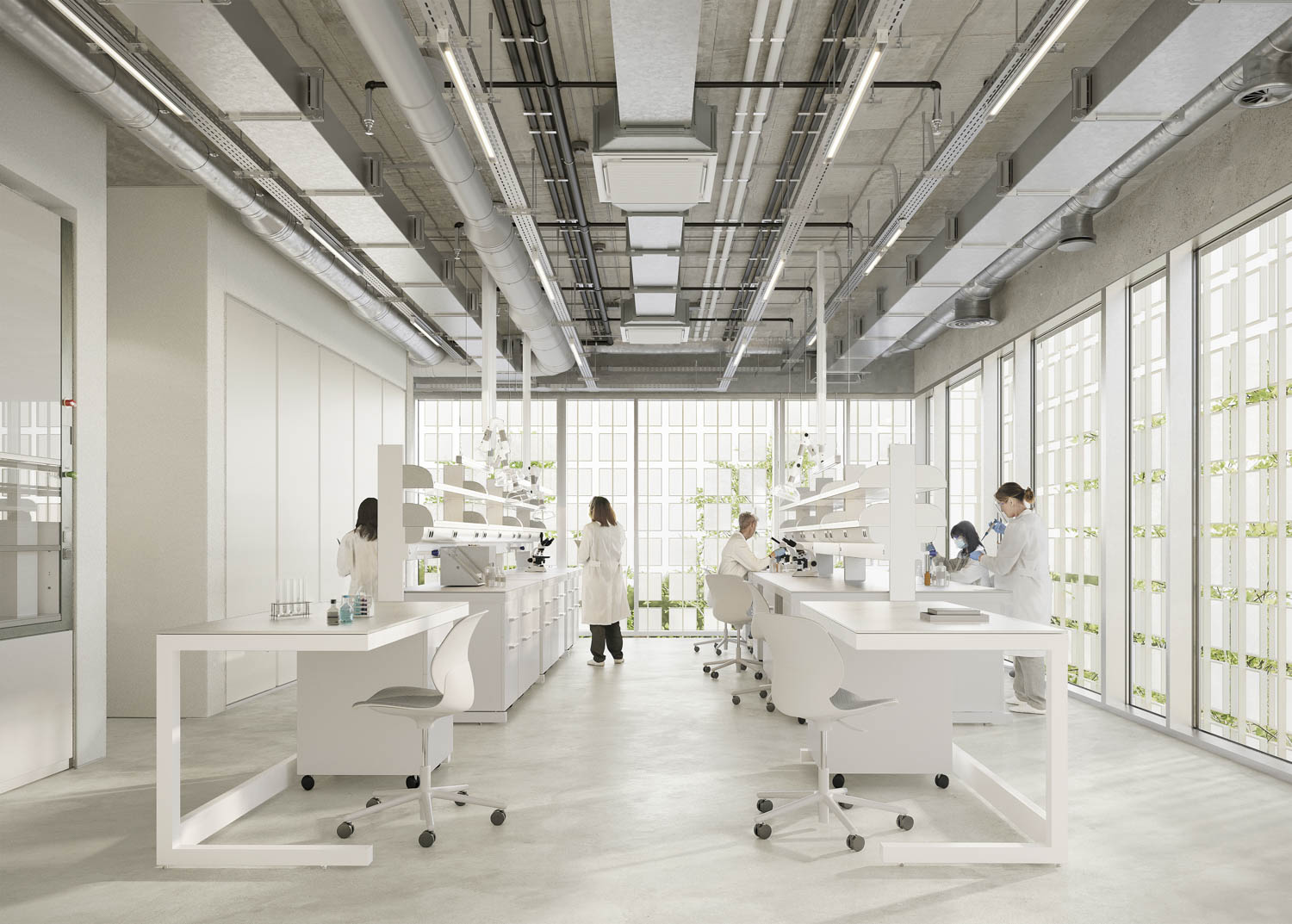
The places dedicated to research are divided into four functional spaces. They are designed to provide different functions with diverse configurations. The spatial portion facing the corridor is suitable for hosting enclosed rooms that host laboratory activities, with minimized need for natural lighting, and is dedicated to storage spaces, biological material stowage, and isolated work areas. The spaces overlooking the façades lend themselves to a flexible organization, either as open‑plan areas or subdivided according to functional requirements.
Applied to all the volumes of the project, this configuration ensures the Institute flexible planning of the internal layout.